Welcome to World Cultural Heritage Pile Dwellings
Step back in time and discover everything you’ve always wanted to know about the Stone Age. With 23 reconstructed houses, the pile dwellings form one of Europe’s largest open-air archaeological museums.
**Pile dwellings on the water showcase a World Heritage Site**
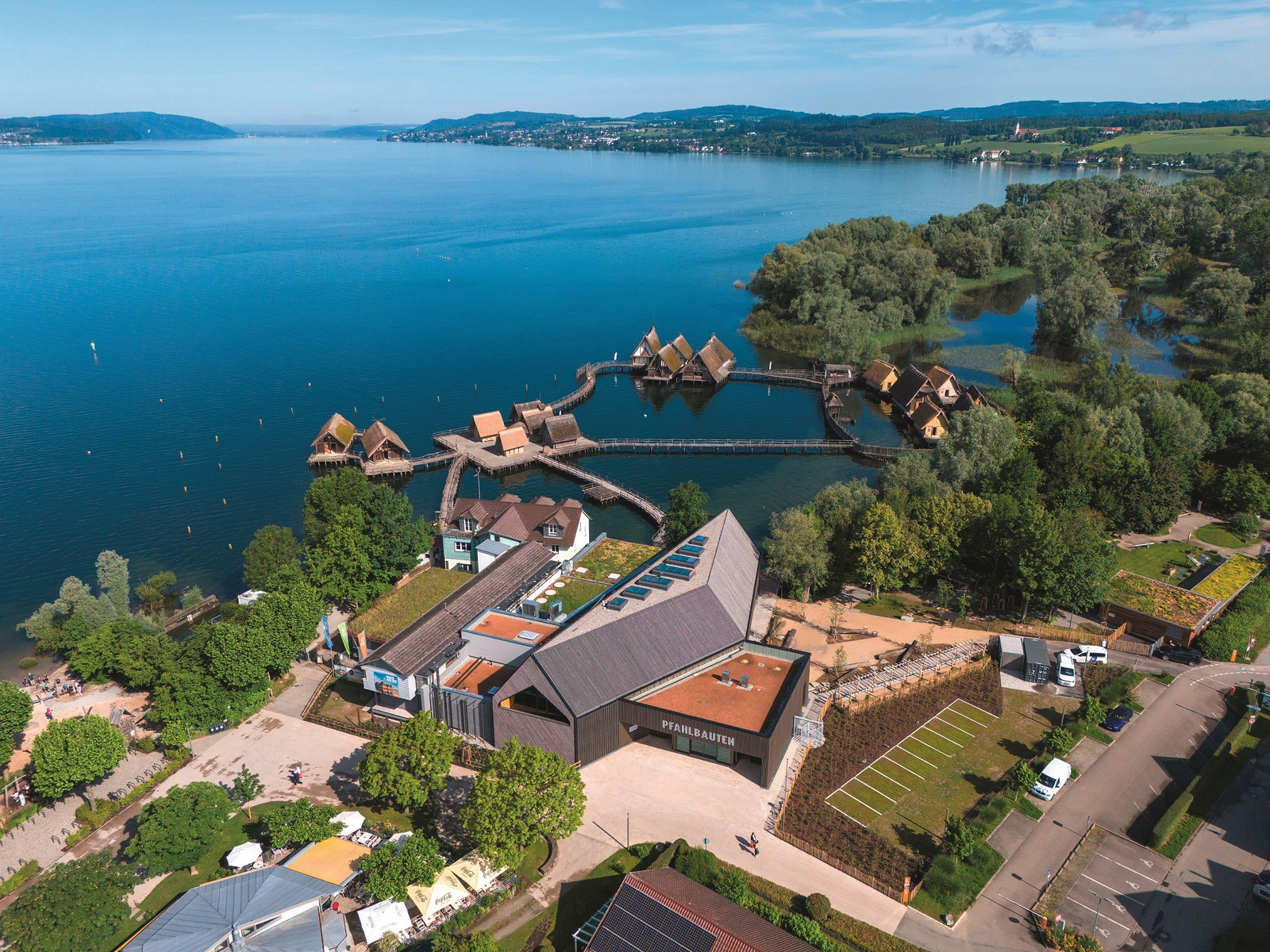
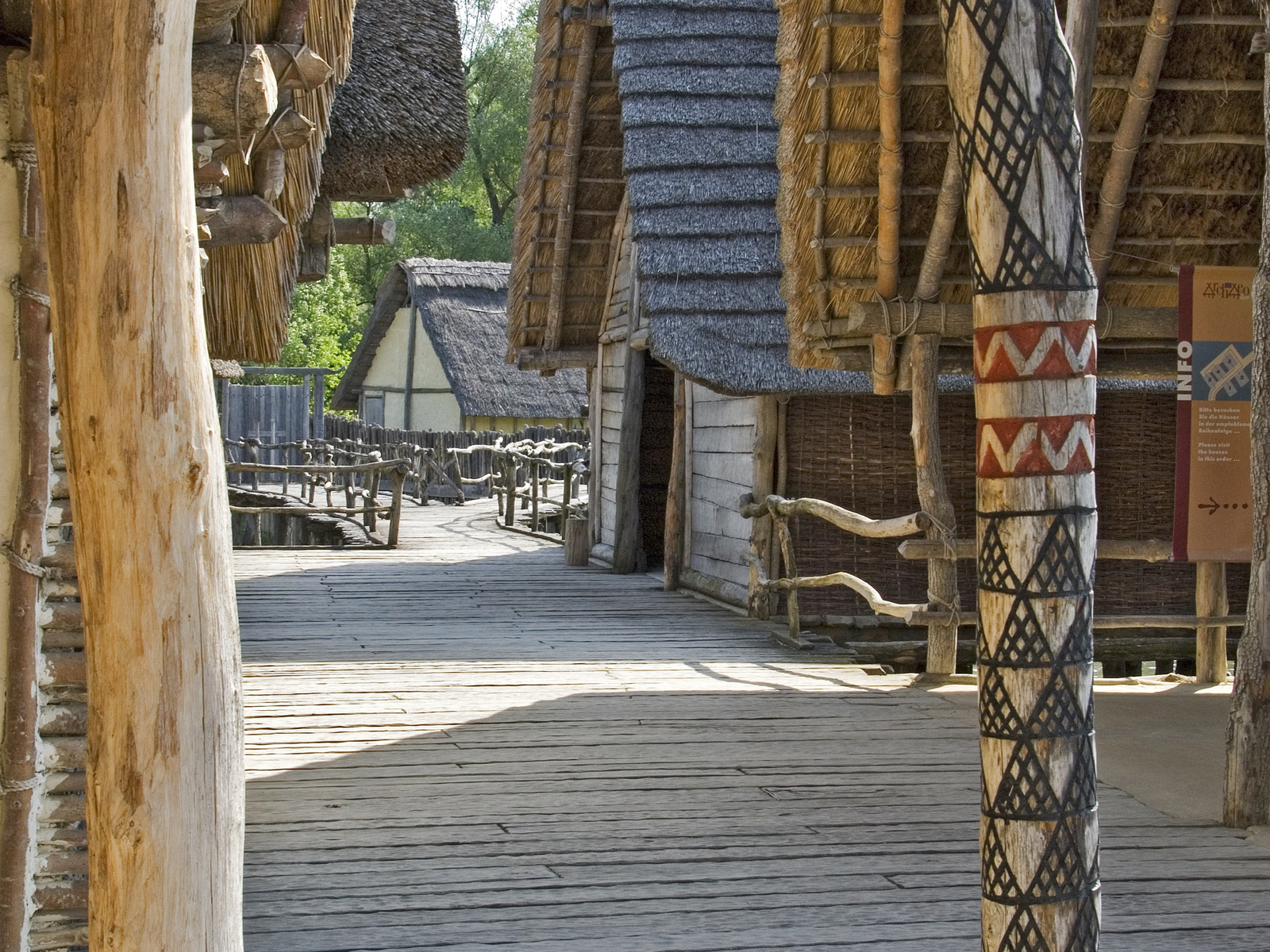
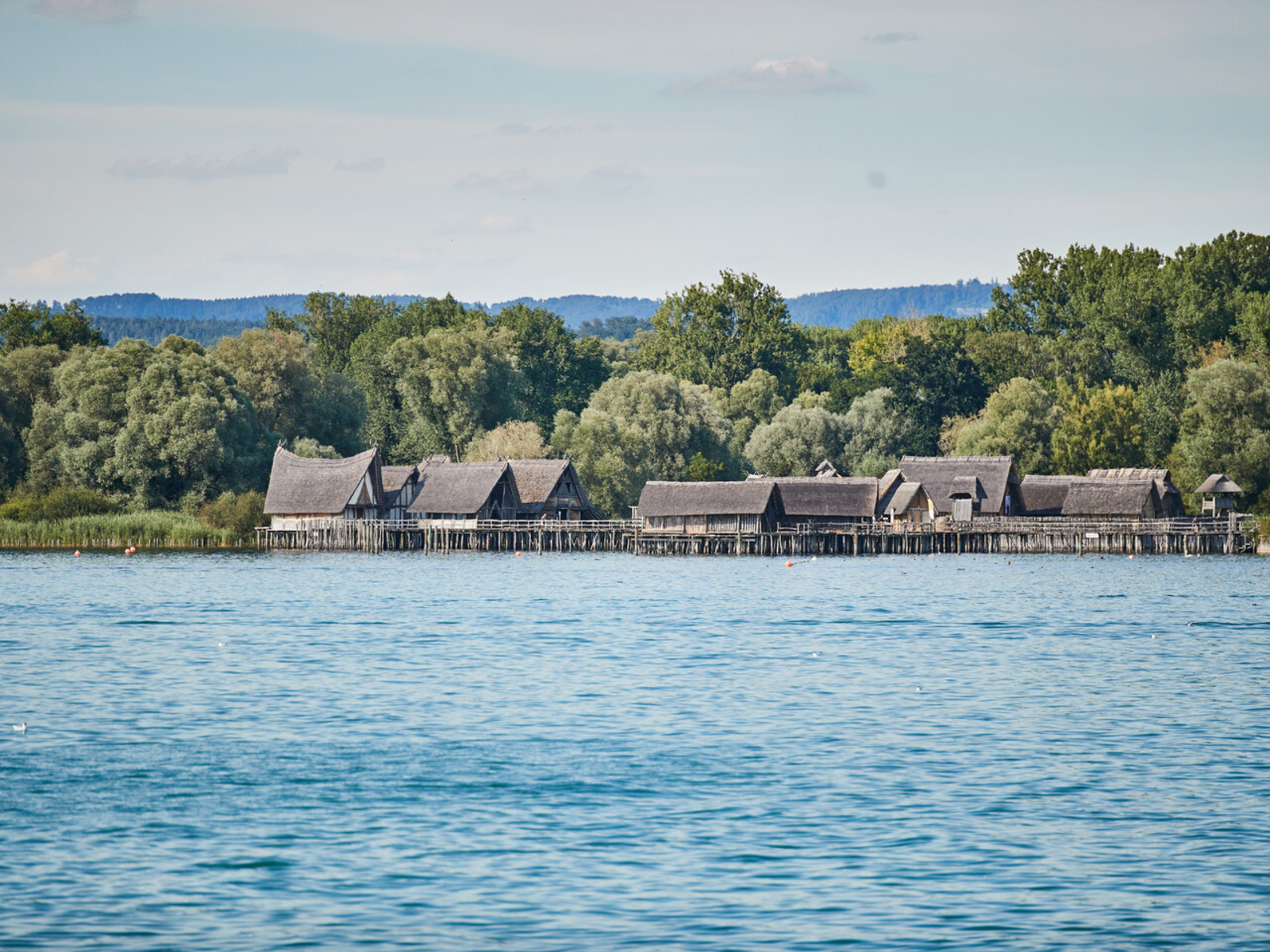
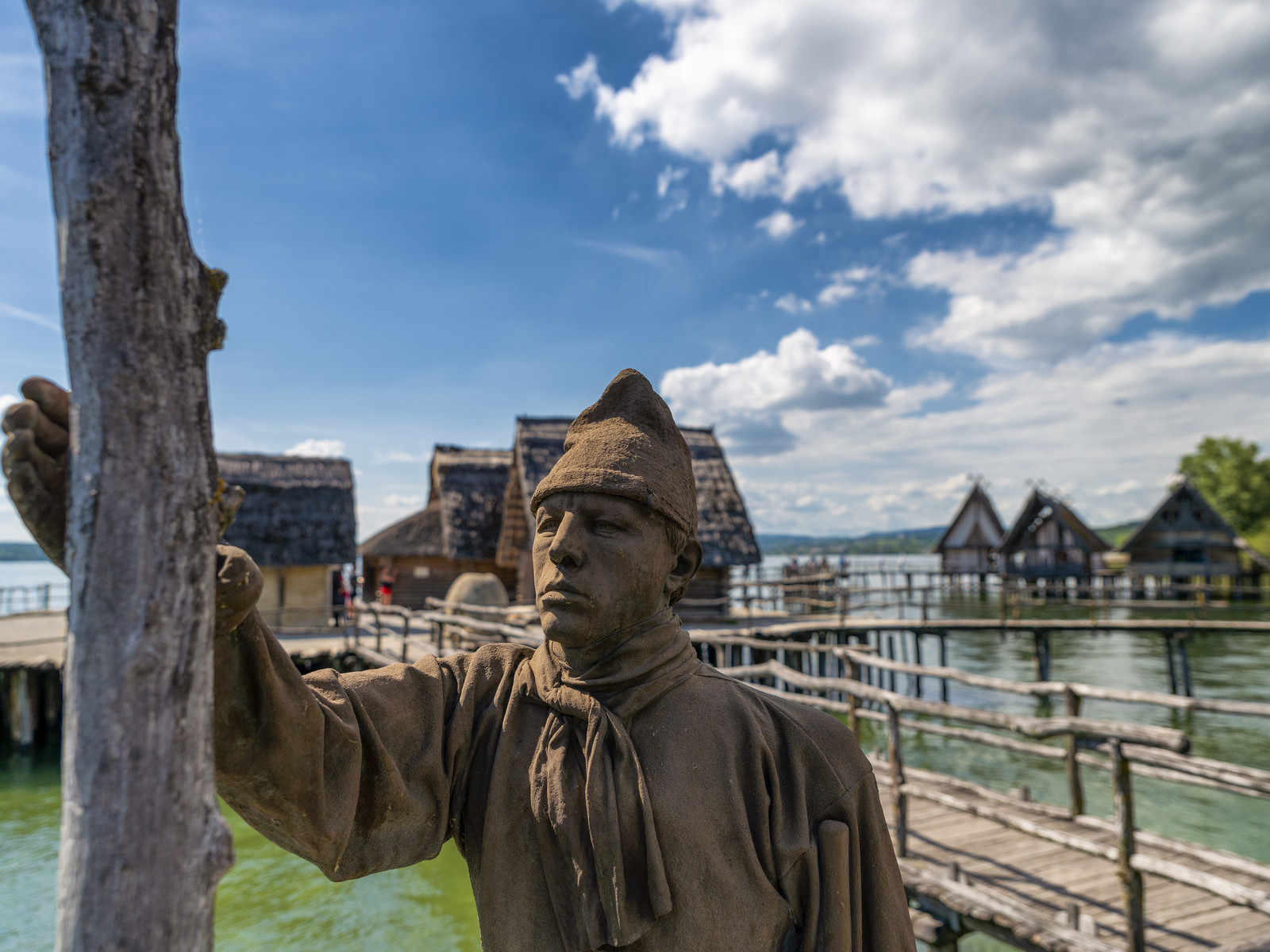
In 2011, the “Pile Dwellings around the Alps” were designated a **World Heritage Site** by UNESCO. For over 100 years, the Lake Dwelling Museum has been bringing this submerged World Heritage Site back to life. It is one of the most popular leisure destinations on Lake Constance and one of Europe’s largest archaeological open-air museums. The centerpiece of the open-air museum is 23 faithfully reconstructed lake dwellings, where museum staff provide insights into the lives of past generations. The houses in Germany’s oldest archaeological open-air museum hold a special fascination. On the sprawling grounds, there is something new to explore at every turn. During the tour, guests enjoy the open-air site with its wonderful atmosphere in the idyllically situated bay on the edge of the nature reserve. From the museum villages, visitors have a magnificent view of the entire Lake Überlingen. The museum’s two founding houses, dating from 1922, host an exhibition on the museum’s early history. Next come the Bronze Age villages (Unteruhldingen and Wasserburg Buchau) and the Neolithic village (Sipplingen). In the adjacent trail, children can playfully discover the world of the Stone Age. During school breaks, experimental archaeological events and hands-on activities take place here. In the Pile-Dwelling Cinema (open during school breaks and on weekends), films on various themes related to life in the Stone Age are shown.
**New Museum Building**
In June 2024, the New Museum by the Lake opened at the Open-Air Museum on Lake Constance. The over 12-meter-tall wooden structure, shaped like an upside-down dugout canoe, serves as a **visitor center and exhibition hall**. It is fully accessible. On the ground floor, visitors trace the footsteps of the pile-dwelling people. It illustrates how divers explore the lake bed as well as the significance of the World Heritage Site for the pile dwellings. Here, visitors discover original artifacts, including 6,000-year-old hats, the ergonomically shaped handle of a bronze sickle, and millennia-old remains of houses from that era. The ARCHAEORAMA storytelling machine makes the invisible World Heritage Site visible. Visitors accompany underwater researchers on their dive without getting wet. Museum guests appear to walk through the underwater world of a pile-dwelling settlement.
The Pile-Dwelling Museum, recognized as a **family-friendly** and **accessible facility**, is accessible to families with strollers or people with disabilities. The exhibition hall also features a ground-level **restroom for everyone**
with wide doors, a lift for people in wheelchairs to
change diapers, and an emergency system. For more information on
accessibility at the museum, click [here.](https://www.pfahlbauten.de/ihre-tour/barrierefreiheit/)
**A Classroom with a Difference**
The Lake Dwelling Museum offers exciting guided tours and projects for school groups. Further information can be found [here.](https://www.pfahlbauten.de/schulen/)
**Pets**
Provided they are kept on a leash and the necessary distance
from other dogs (and people) is maintained, **dogs** are permitted on the
outdoor grounds of the Pfahlbaumuseum. Dogs are **not** permitted in the exhibition hall of the
Neues Museum or in the ARCHAEORAMA multimedia show.
Source: DZT Knowledge Graph