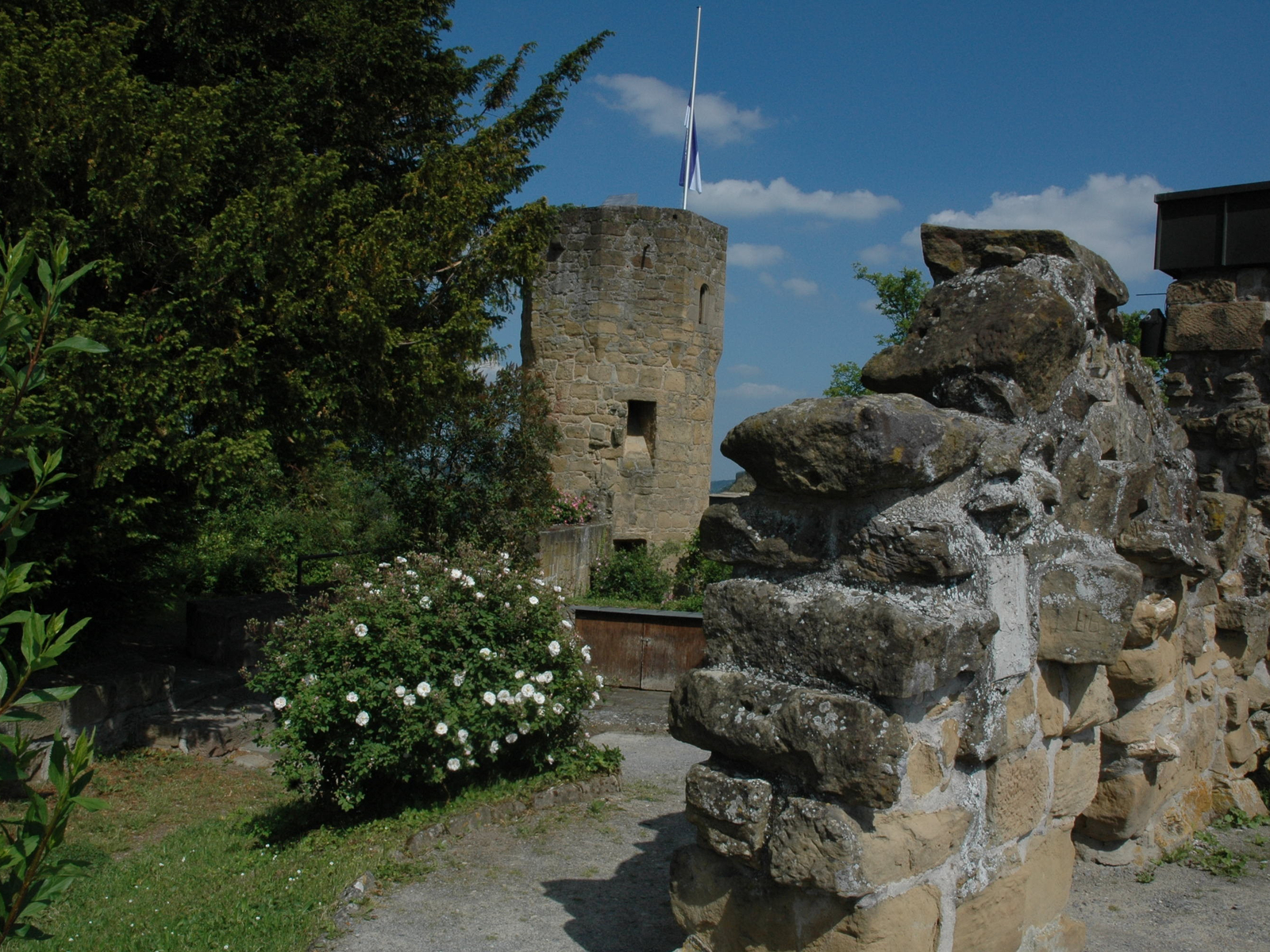
Welcome to Weinsberg - Weibertreu Castle
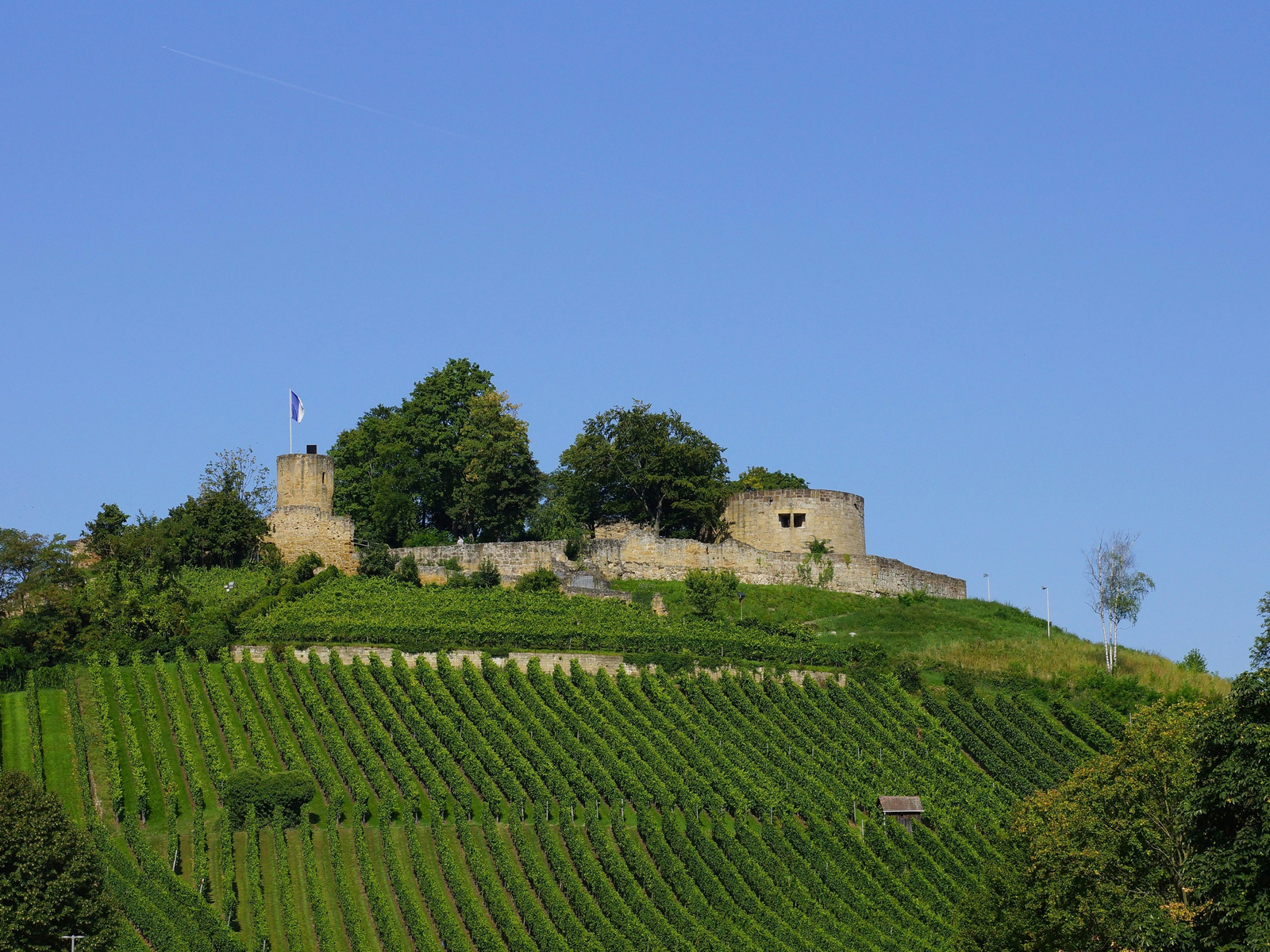
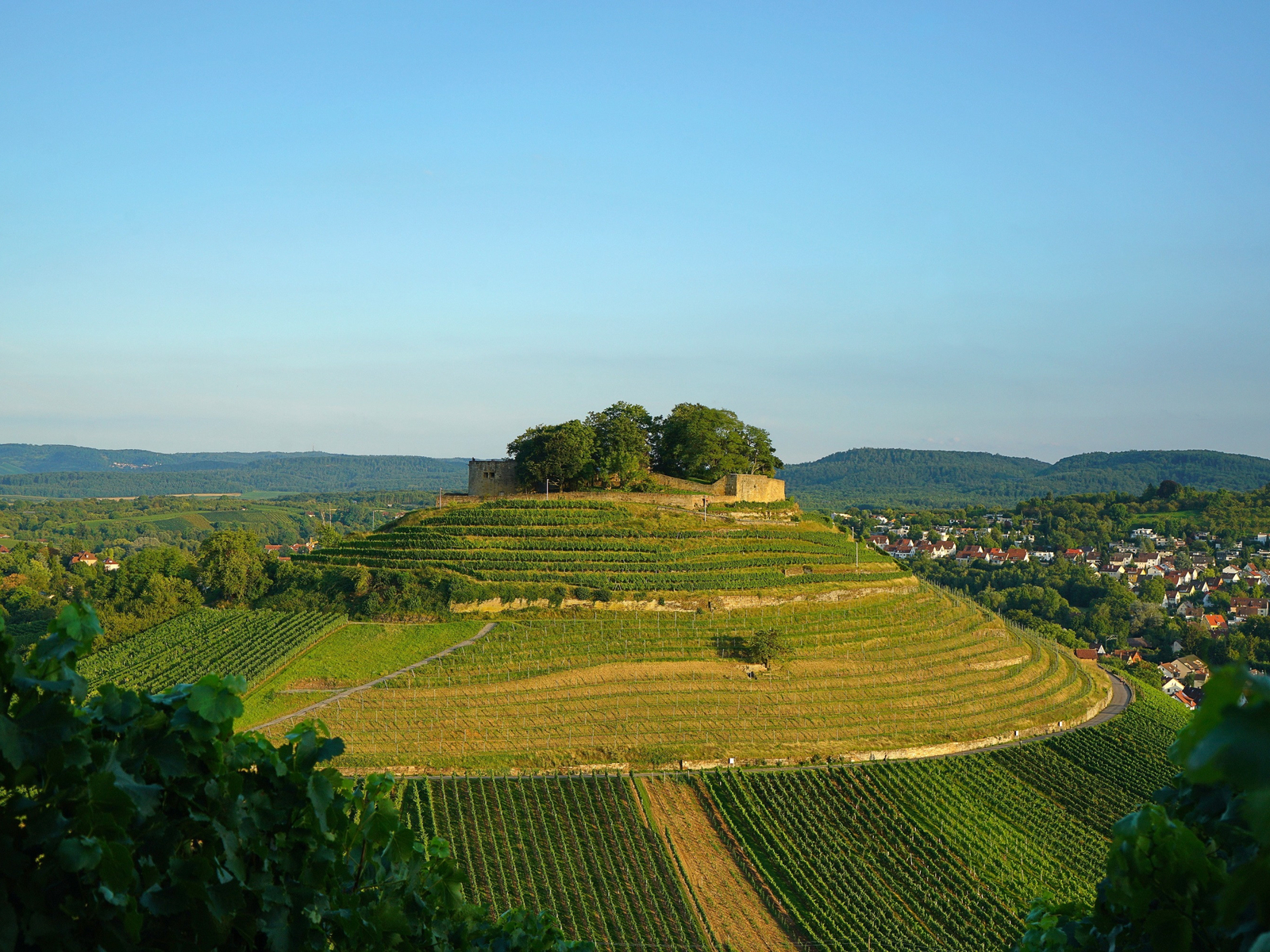
The Weibertreu Castle Ruins are an impressive viewpoint and a small open-air museum at the entrance to the Weinsberg Valley. A particularly charming hike up the trail takes you along the Wine and Rose Loop. During the summer months, refreshments are available at the castle.
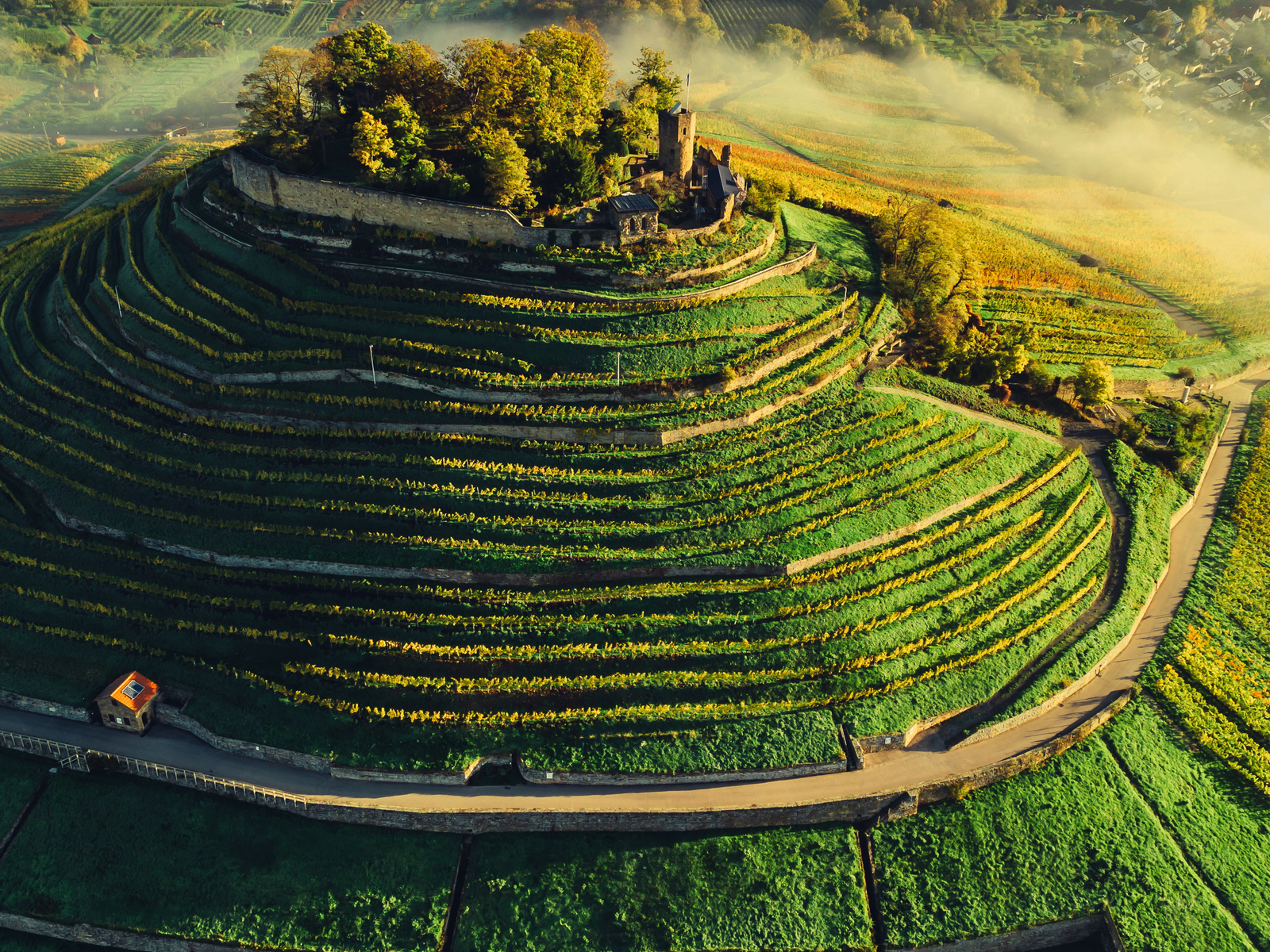
The castle ruins are particularly interesting to visitors due to their exposed location. From the castle hill—which is now used for viticulture—the view stretches far across the Weinsberg Valley into the Löwenstein Mountains.
A small highlight: the “King’s Wall” featuring the names of royalty who visited the castle, and the “Stone Album.” The “Stone Album” contains numerous inscriptions bearing witness to a history-rich past.
The castle grounds are open for visits year-round and remain closed only in the event of ice and snow. A small admission fee is charged.
### Castle Tour & Exhibition "The Lords of Weinsberg"
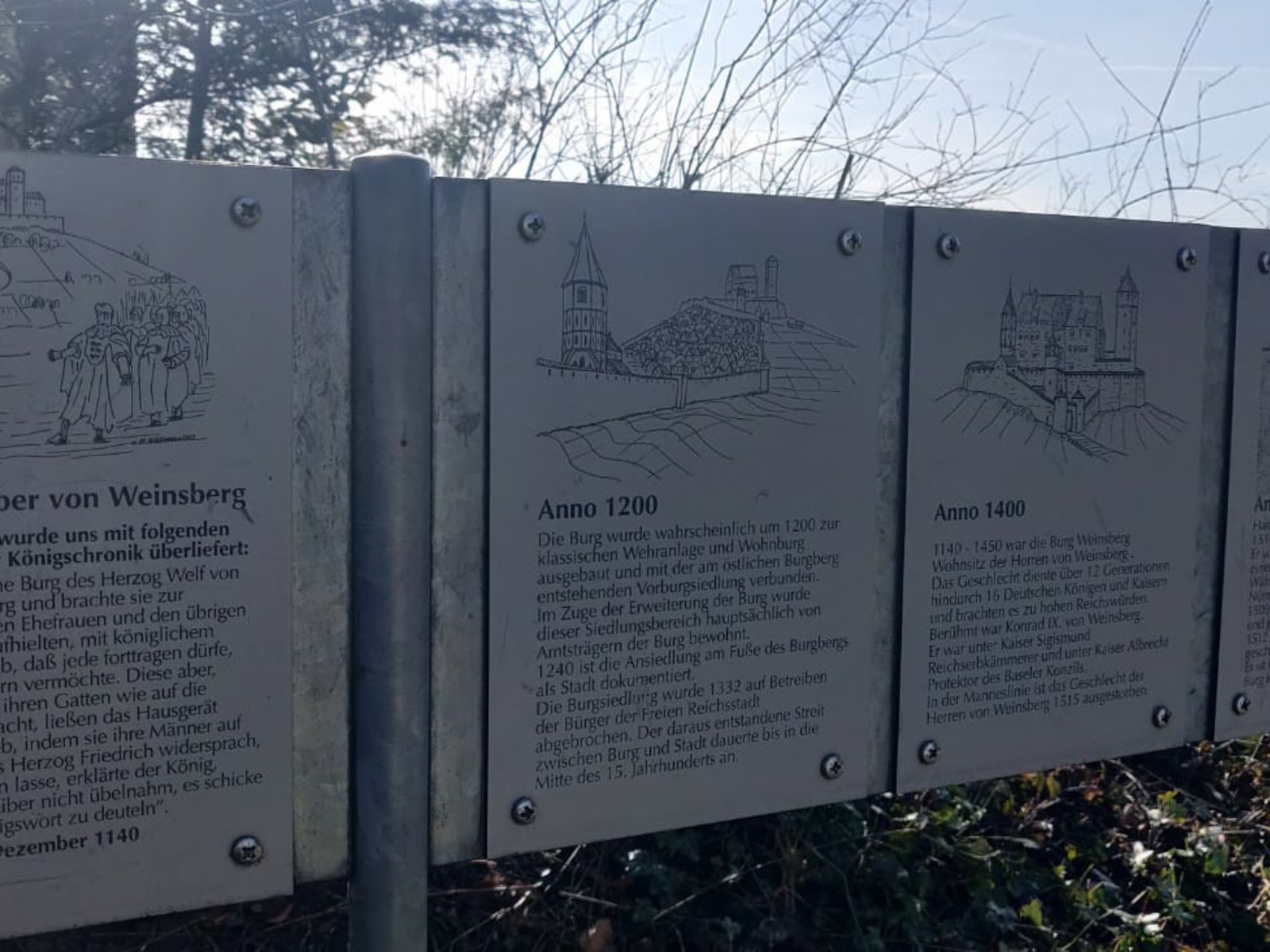
A walking tour with various information panels on the castle’s history and architecture has been set up within the castle grounds.
### Castle and Guided Tours
- A public guided tour is held regularly from April to October on the last Sunday of the month
- Appointments for groups can be arranged at any time.
### Food and Beverage at the Castle
The castle kiosk has been renovated and reopened as the café "s`Rickele." The café offers a delicious selection of food and drinks. It is generally open on weekends and holidays when the weather is good.
There are several small picnic areas with tables and benches within the castle grounds.
### The History of the "Faithful Women"
In November 1140, the Staufer King Conrad III advanced against Weinsberg Castle, besieged it for several weeks, and was ultimately victorious.
The Cologne Chronicle reports that the king promised the women at Weinsberg Castle safe passage and granted them permission “to carry away whatever they could bear on their shoulders.” The women took the king at his word and carried their husbands on their backs down into the valley, thus saving them from execution. Thus, the women became known as the “Faithful Women” of Weinsberg and gave the castle its name.
Numerous exhibits and stories about the legend of the Faithful Women and the history of the castle can be discovered at the Weibertreu Museum. The small museum is housed in the town hall of Weinsberg.
### The History of the Castle
The site is the ruin of a castle likely built for military purposes in the early 11th century. It was first recorded in 1037. The founder, Countess Adelheid, is said to have lived at Weinsberg Castle until the foundation. Countess Adelheid was the mother of Emperor Conrad II from her first marriage and is therefore referred to as the progenitor of the Salian dynasty. In 1140, the castle was still owned by the Guelphs, who were fighting the Staufers for power in the empire.
### Wine and Rose Trail on Burgberg
The approximately 4 km long **[Wine and Rose Trail](https://www.heilbronnerland.de/tour/wt7-wein-und-rosenrundweg-weinsberg)** winds through the vineyards of the Weinsberg State Winery. The route is lined with countless varieties of roses and wild roses. In the western section, a small wine educational trail has also been established by the Weinsberg State Winery and the Weinsberg State Institute for Viticulture and Pomology. Information boards explain the viticulture.
Source: DZT Knowledge Graph